Gauge: the hidden number
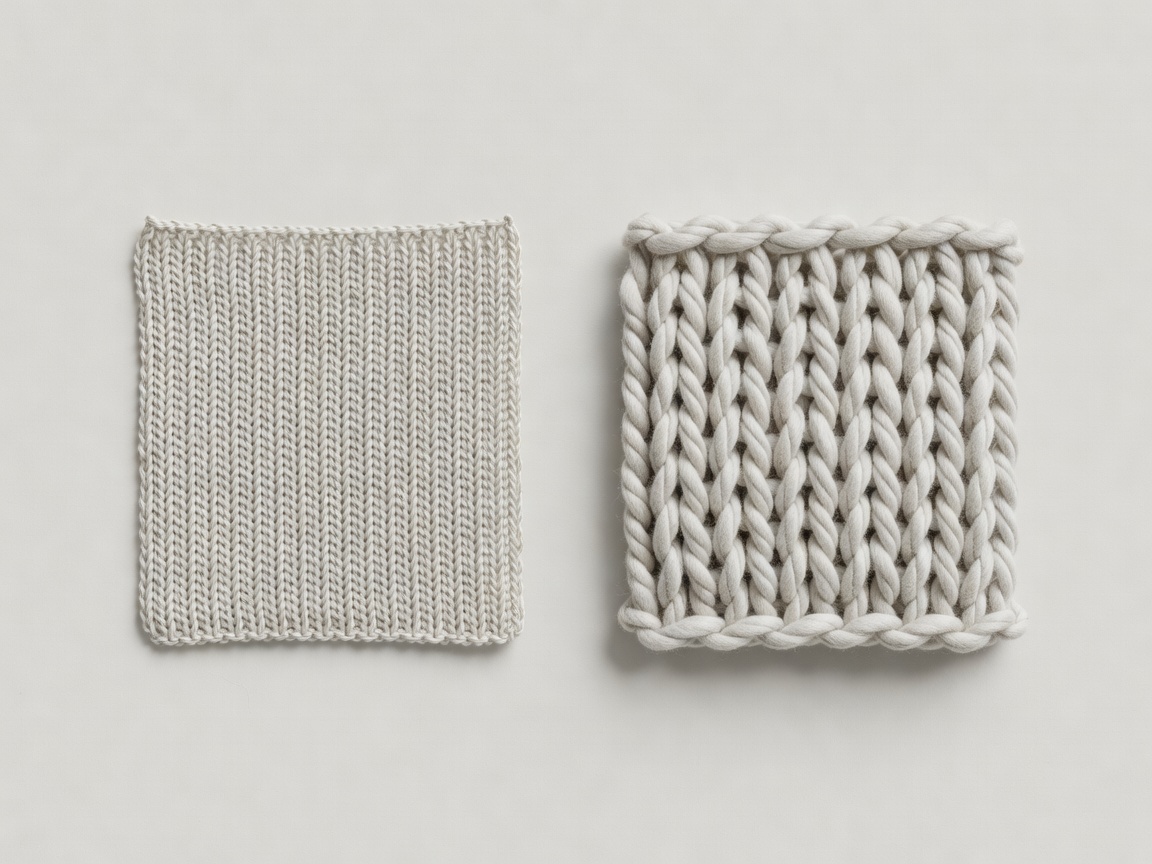
Knitting is a chain of interlocking loops. How many loops fit into a given width, the gauge, sets much of a garment's character. Hand knitters measure it as stitches per 10 centimetres; factories describe machines by gauge, roughly the number of needles per inch on the needle bed. A 12-gauge or finer machine produces the smooth, thin knits seen under blazers. A 7-gauge produces a classic mid-weight sweater. A 3- to 5-gauge produces chunky outerwear knits.
Fine gauges create a dense surface that blocks wind and lies flat under other layers. Coarse gauges create thicker fabric with more air inside, but also more gaps for wind to pass through. That is why a chunky open knit can feel colder on a breezy day than a fine sweater of the same weight worn beneath a coat.
When you handle knitwear in a shop, hold it to the light. If you can see clearly through the stitches, it will need a shell outdoors in cold wind.
The foundation stitches
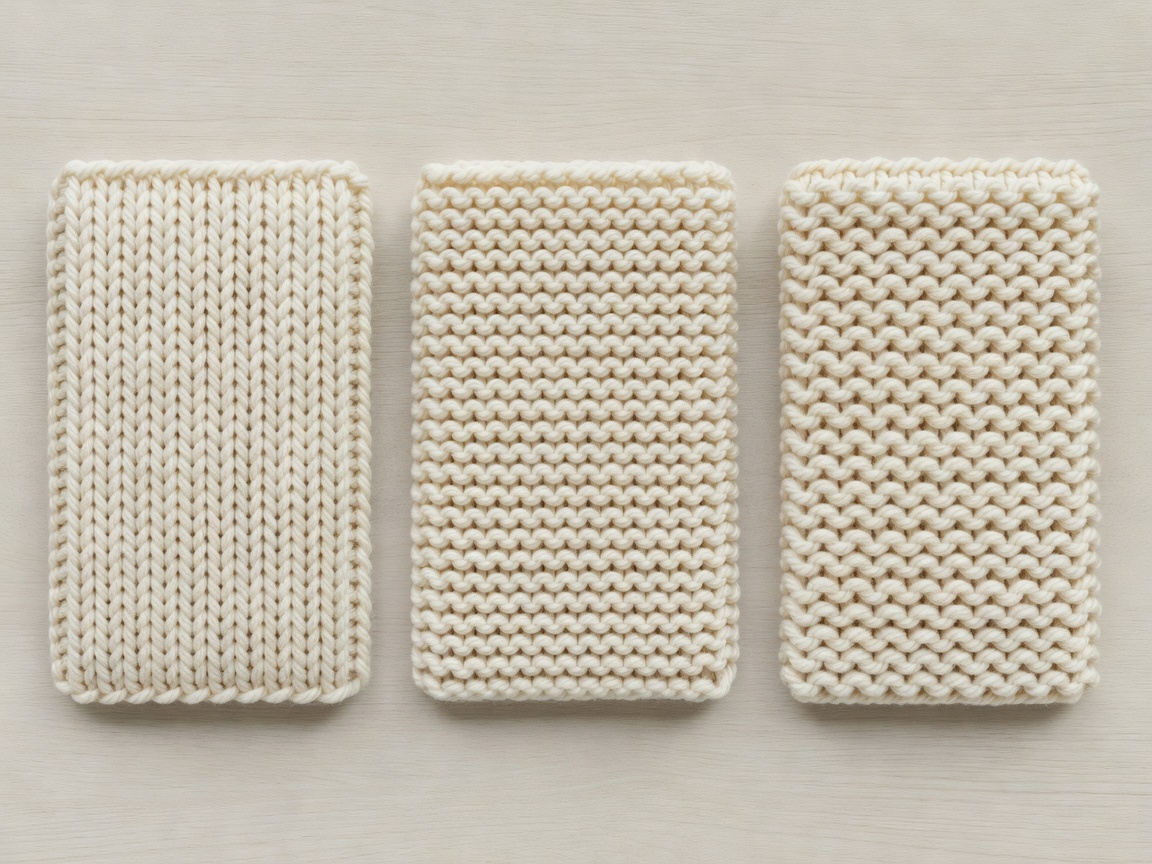
Jersey, called stockinette by hand knitters, shows smooth V columns on the face and bumpy loops on the back. It is light and drapes well, but its edges curl, which is why sweaters finish it with ribbed bands.
Rib alternates columns of knit and purl stitches. It contracts sideways and springs back, gripping wrists, waists and necks. A fully ribbed sweater hugs the body and suits a close mid-layer.
Garter stitch forms horizontal ridges and lies flat. It compresses lengthwise, so it is thick, squashy and warm for the yarn used. Moss or seed stitch, alternating knit and purl in every row, produces a pebbled, stable fabric that resists curling.
Barbara G. Walker's A Treasury of Knitting Patterns remains the standard reference for hundreds of these textures, and Elizabeth Zimmermann's Knitting Without Tears explains, with good humour, why construction choices matter more than rules.
Texture that adds warmth
Cables cross groups of stitches over one another, creating raised ropes and doubling fabric thickness along each cable. They are associated with the Aran Islands off the west coast of Ireland, at the mouth of Galway Bay. Alice Starmore's Aran Knitting examines that tradition and its commercial growth in the twentieth century.
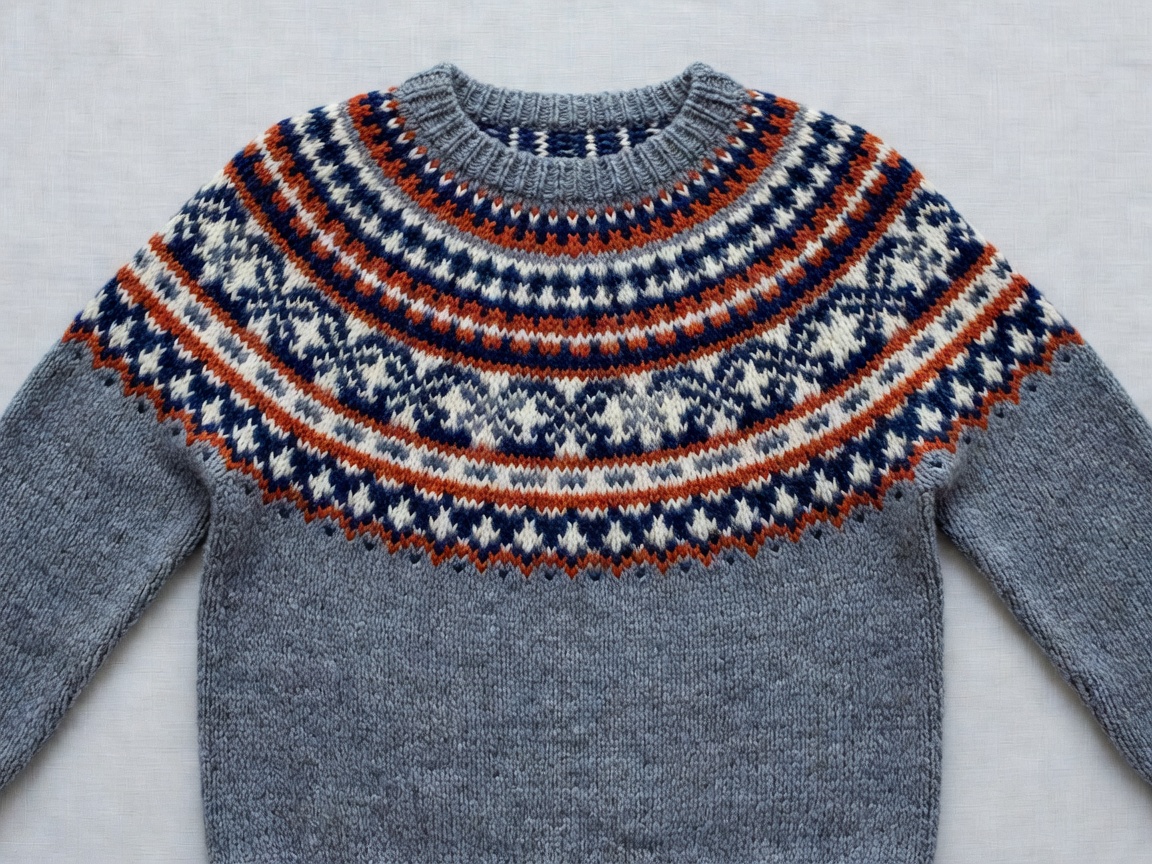
Stranded colourwork, best known as Fair Isle after the small island in Shetland, carries two colours across each row. The unused colour runs as a float on the inside, so the patterned area is effectively two layers of yarn. That is why a Fair Isle yoke feels warmest exactly where you need it: across the shoulders and chest.
Gansey, or Guernsey, sweaters from fishing communities were knitted at tight gauges in worsted-spun wool to shed spray. Brioche uses slipped stitches and yarn-overs to create a lofty, reversible rib that traps air in deep pockets.
Stitches compared
A comparison of common structures knitted in the same mid-weight wool. These are general tendencies, not test results.
| Structure | Thickness | Stretch | Wind resistance | Seasonal use |
|---|---|---|---|---|
| Fine jersey (12gg+) | Thin | Moderate | Good | Base or office layer, all year |
| Rib | Medium | High sideways | Moderate | Close mid-layer, autumn |
| Garter | Thick | High lengthwise | Moderate | Scarves, winter mid-layer |
| Moss / seed | Medium | Low | Good | Cardigans, spring and autumn |
| Cable | Thick in panels | Low | Moderate | Outer knit, winter |
| Stranded Fair Isle | Double | Low | Good | Deep winter |
| Brioche | Very lofty | High | Low alone | Under a shell, winter |
How the garment is assembled
Fully fashioned knitwear is shaped on the machine by increasing and decreasing stitches, leaving small visible marks near the seams; edges are linked loop to loop. Cut-and-sew knitwear is cut from knitted lengths and overlocked, which can unravel at the seams over time. Seamless technologies such as Shima Seiki's WholeGarment machines knit an entire sweater in one piece, removing seams that can chafe under layers.
Once you can read structure, start combining it: Dressing Between Temperatures.