Rest before you wash
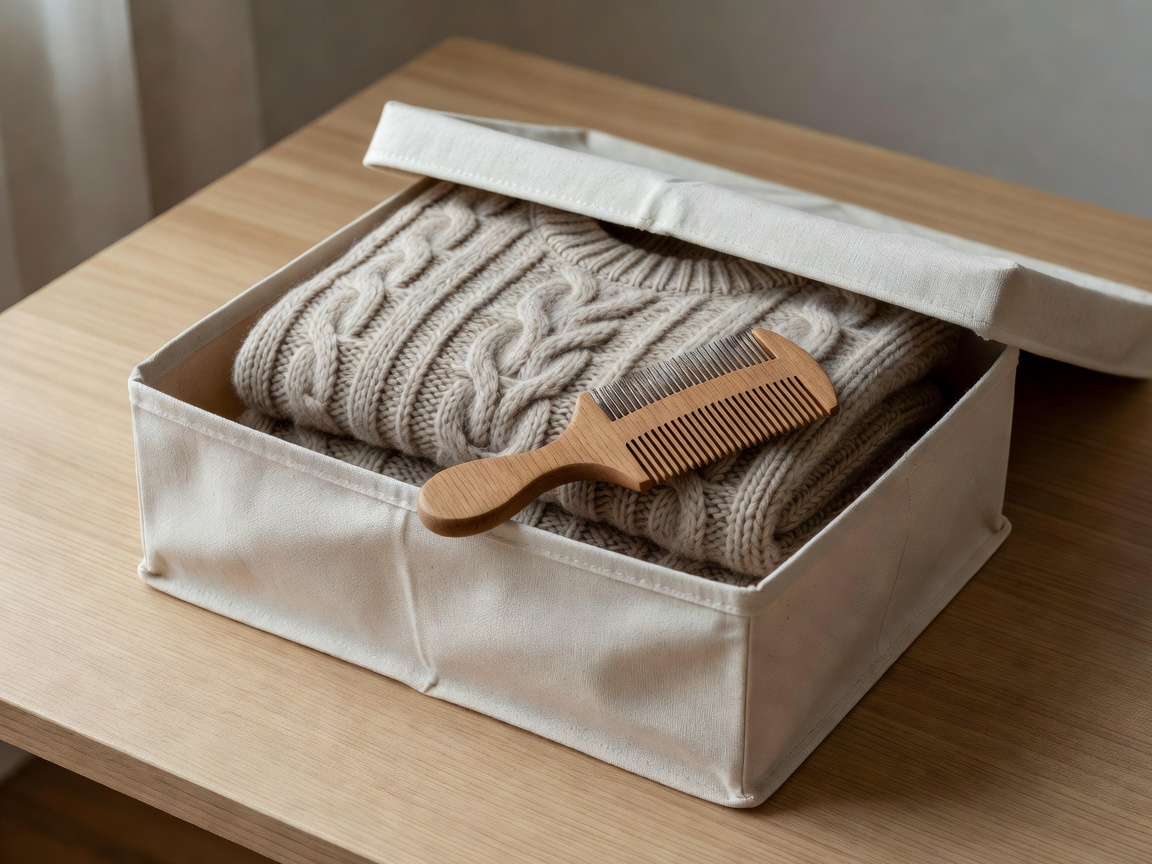
Wool fibres stretch when worn and recover when relaxed. A day off between wears, folded flat, lets a sweater return to its shape. Animal fibres also resist odour better than many synthetics, so an evening of airing near an open window often refreshes a garment that has not been stained or sweated through.
A soft garment brush, drawn in the direction of the knit, lifts dust and surface fibres before they mat. Spot-clean small marks with cool water and a dab of wool detergent rather than washing the whole piece. The less often a knit is washed, the longer its loft and colour last.
This rhythm follows the seasons too. In autumn you may wear a sweater twice a week and wash it monthly; in deep winter, under a coat, it may need even less. In spring, when you sweat more, base layers need more frequent washing than mid-layers.
Why knitwear felts
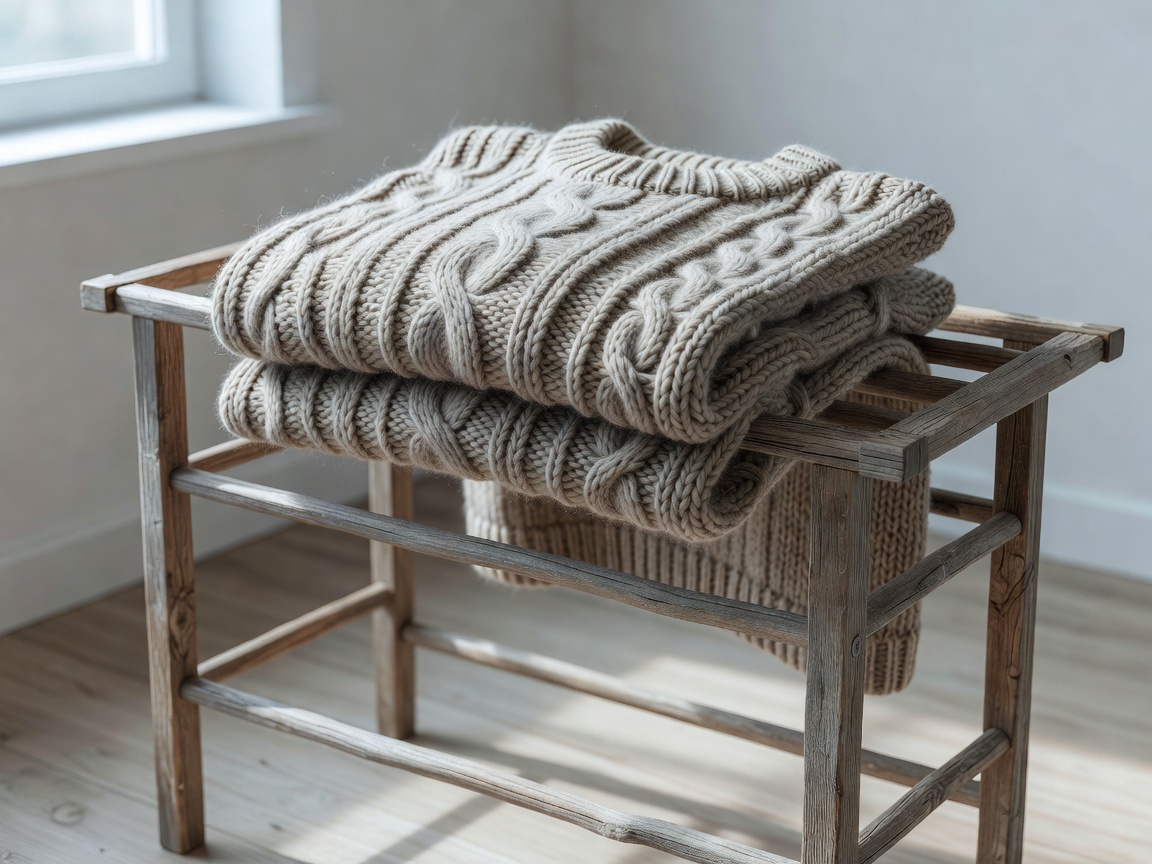
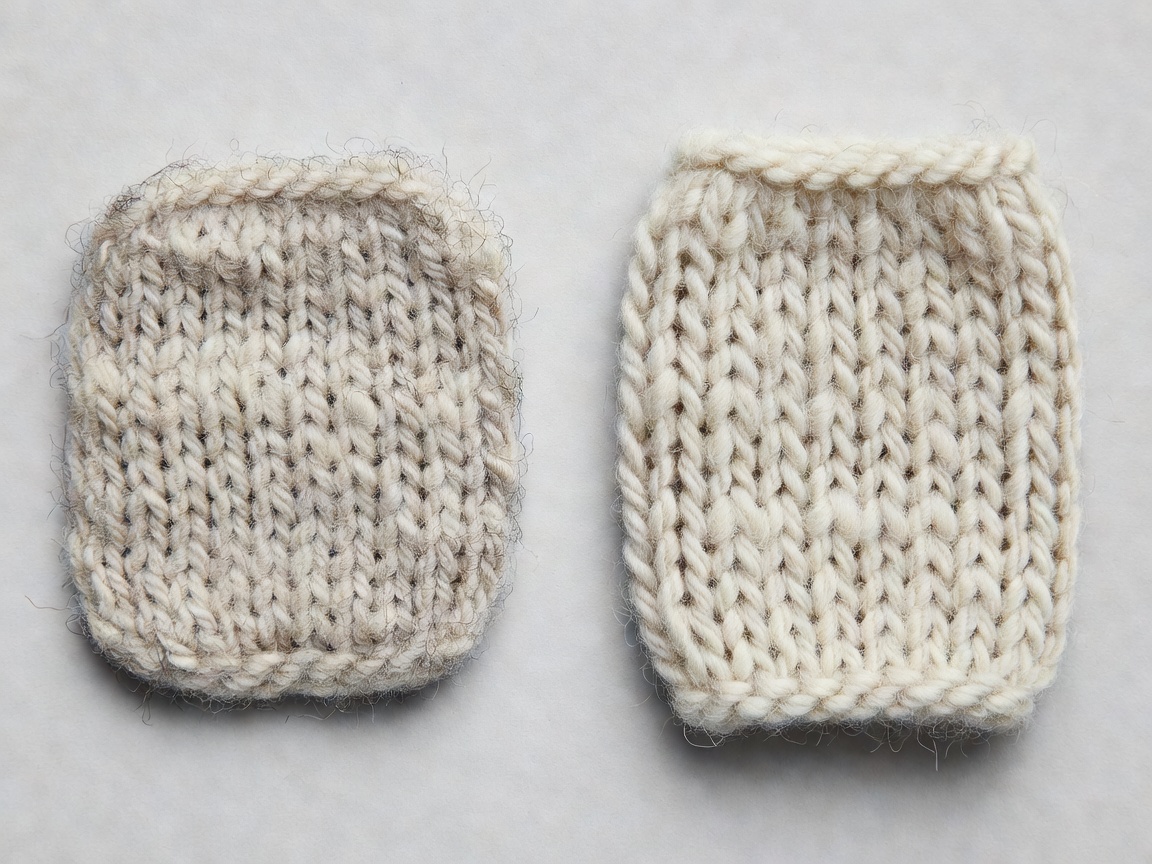
Wool and other animal fibres are covered in microscopic overlapping scales, like roof tiles. With heat, moisture and agitation, those scales catch on one another and ratchet together. The fabric shrinks, thickens and loses stitch definition: felting. It cannot be reversed.
Superwash treatments smooth or coat the scales so a garment tolerates a gentle machine cycle. Untreated wool, cashmere and alpaca need cool water and almost no movement. Temperature shocks, a hot rinse after a cool wash, add to the risk.
The Woolmark Company runs a programme that approves washing machine wool cycles as suitable for machine-washable wool; a certified cycle is gentler than a standard delicate setting, but it still applies only to garments whose labels allow machine washing.
Reading care symbols
Care symbols in Europe and much of the world follow the GINETEX system, standardised internationally as ISO 3758. In the United States, the Federal Trade Commission's Care Labeling Rule (16 CFR Part 423) requires care instructions on most apparel and allows symbols defined in ASTM D5489. The five basic shapes are consistent:
| Symbol | Meaning | What to look for on knitwear |
|---|---|---|
| Washtub | Washing | A hand in the tub means hand wash; a number gives maximum °C; bars beneath mean gentler cycles |
| Triangle | Bleaching | Crossed out on nearly all wool and coloured knits |
| Square | Drying | A horizontal line inside means dry flat; a circle inside means tumble drying |
| Iron | Ironing | Dots indicate heat; one dot is lowest |
| Circle | Professional care | Letters such as P or F indicate dry-cleaning solvents; W means professional wet cleaning |
A gentle hand wash, step by step
Use this only when the label permits hand washing. It is general practice, not a substitute for the maker's instructions.
- Prepare cool waterAround 30°C or cooler, with a detergent formulated for wool, fully dissolved.
- Submerge and soakPress the garment under; leave it for 10–15 minutes. Do not rub or wring.
- Rinse at the same temperatureAvoid temperature shocks; press water through rather than swishing.
- Roll in a towelLay flat on a towel, roll it up, press to remove water.
- Dry flat in shapeAway from direct heat and sun; smooth to its original measurements.
Pills, moths and the summer drawer
Pills form where friction works short fibres loose: under arms, at cuffs, where a bag strap rubs. They are not a defect in themselves; even fine cashmere pills in its first weeks. Remove them with a sweater comb or a battery fabric shaver held lightly, never by pulling.
The common clothes moth, Tineola bisselliella, lays eggs in undisturbed, soiled animal fibres; it is the larvae that eat. Clean garments before storing them, as body oils and food traces attract larvae. Store in breathable cotton bags or sealed boxes, and disturb stored knitwear periodically. Cedar and lavender may help deter adults, but they are not a reliable cure for an existing infestation.
At the end of winter, make care part of the seasonal turn: wash, dry, inspect seams, mend small holes with a darn, then fold away with tissue in the creases. In autumn, air everything before its first wear.
Questions left over? Browse Knitwear Notes Answered.