Why layers outperform a single thick knit
Clothing keeps you warm by slowing heat loss, and the main insulator is air that cannot move. Each layer of fabric holds its own air, and the thin gap between layers holds more. Two medium sweaters can therefore be warmer than one heavy one, provided neither is so tight that it squashes the other flat.
Physiologists describe clothing insulation with the clo unit, introduced in 1941 by A. Pharo Gagge and colleagues at Yale. One clo is roughly the insulation of a light business suit that keeps a resting person comfortable at about 21°C. Standards such as ISO 9920 and ASHRAE Standard 55 list estimated clo values for garments: a thick sweater adds a fraction of a clo, a winter coat considerably more. You do not need the numbers, only the principle: insulation adds up layer by layer.
The second reason to layer is moisture. When you walk briskly, you sweat even in cold air. A base layer that moves vapour away, and a mid-layer that tolerates it, keep you from chilling when you stop.
The three working layers
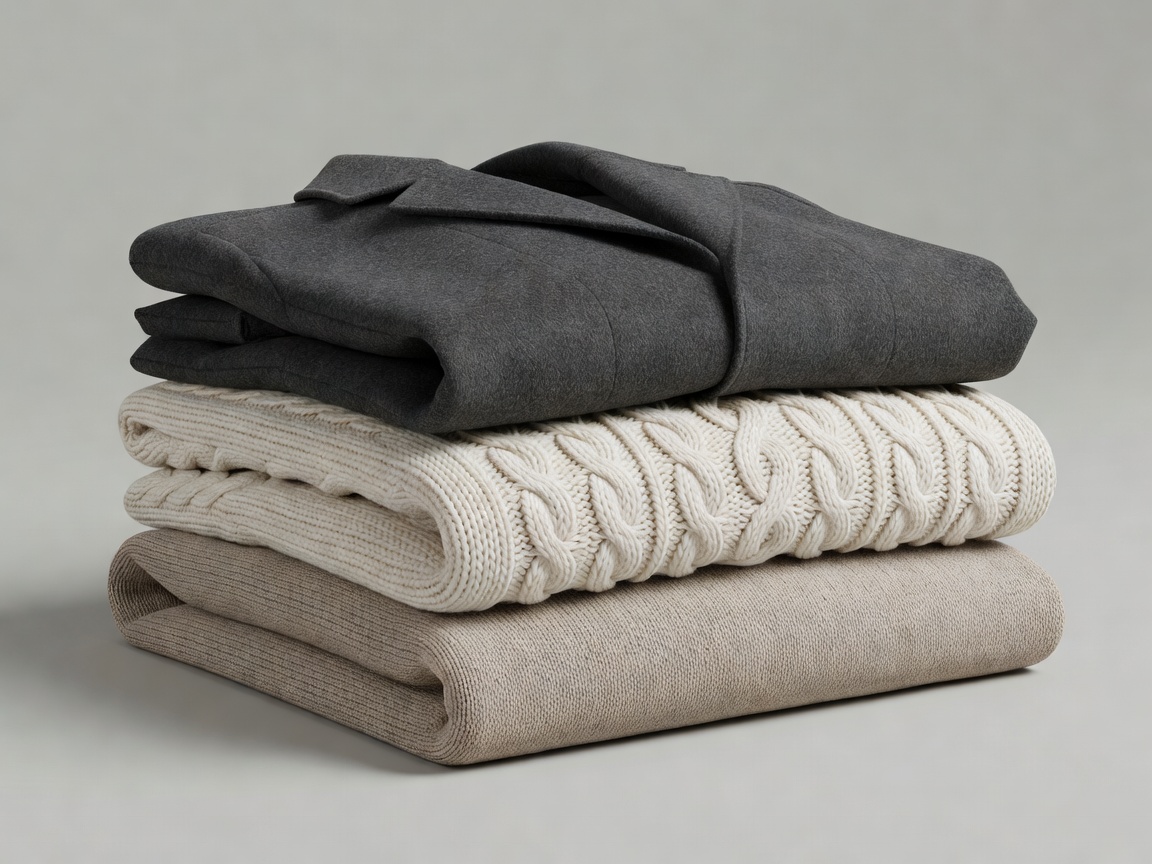
The base sits on the skin. Fine merino jersey, a light cotton knit in warmer months, or a silk blend. It should be smooth, close but not tight, and quick to move moisture.
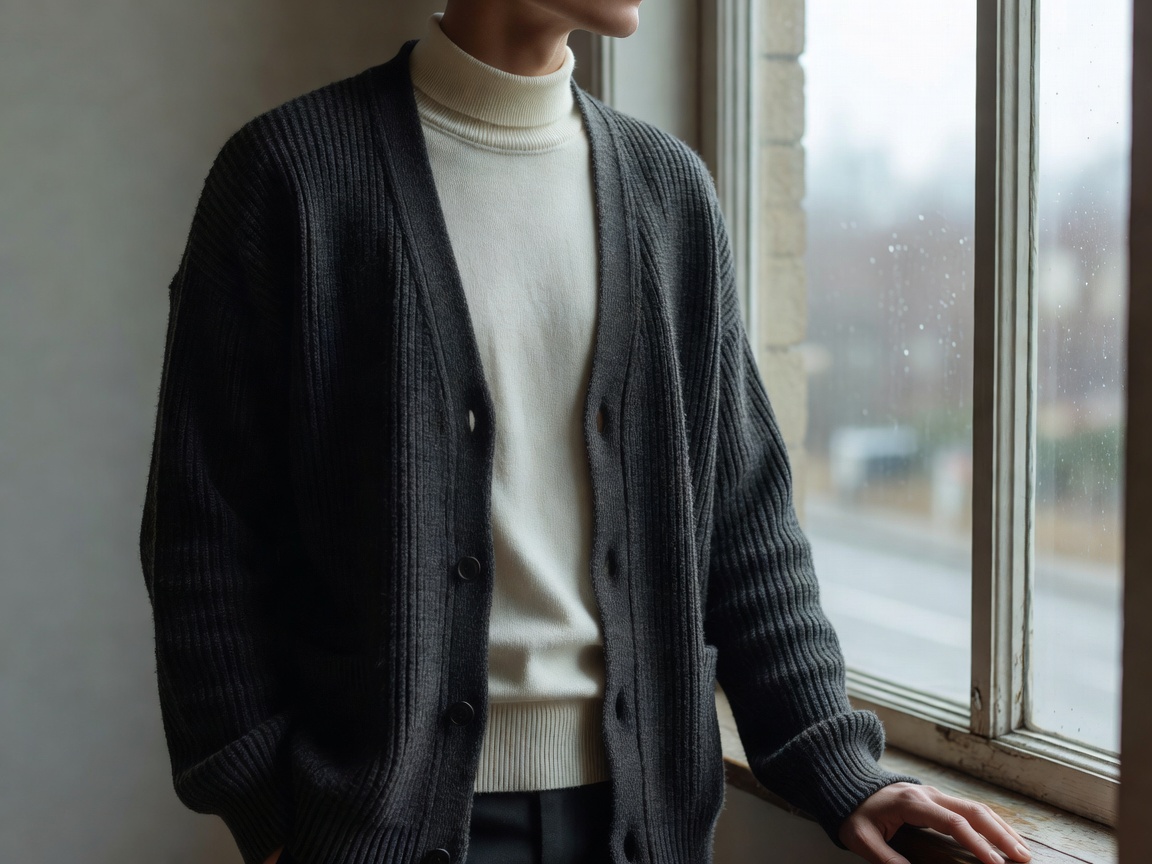
The mid-layer holds air. This is where most sweaters and cardigans live. Choose structure for the conditions: rib and fine gauge for mild days, cables or brushed mohair for cold ones. A cardigan is the most adjustable mid-layer because you can open it without undressing.
The shell blocks wind and rain. Knitwear alone, however thick, lets wind through its stitches. A waxed cotton jacket, a dense wool coat or a technical shell preserves all the warm air beneath it.
Necklines matter in sequence. A crewneck under a shawl-collar cardigan looks tidy; a roll neck under a crewneck crowds the throat. Keep the thinnest neckline closest to the skin.
Labelled seasonal sequences
The temperature ranges below are approximate, for a person walking at an easy pace. Wind, humidity, sun and personal metabolism change them considerably.
Autumn shoulder days (about 8–15°C)
- Base: cotton or fine merino teeLight enough for a warm afternoon.
- Mid: 12-gauge merino crewneck or moss-stitch cardiganDense enough to cut a breeze, easy to remove.
- Shell: unlined jacket or overshirtCarried or worn open; adds wind protection at dusk.
Deep winter (about −5–4°C)
- Base: merino long-sleeve, 150–200 g/m²Moves sweat during the walk to the station.
- Mid: cable, Fair Isle or brushed alpaca sweaterThe air-holding core of the outfit.
- Shell: lined wool or insulated coatBlocks wind so the mid-layer can do its work.
- Extremities: rib-knit hat, scarf, glovesSmall knits with large returns on exposed skin.
Wet spring (about 6–12°C, showers)
- Base: fine merino or cotton-modal knitComfortable across shifting sun and cloud.
- Mid: lightweight wool cardiganWool stays warm if rain reaches it; cotton would not.
- Shell: packable waterproof or waxed jacketRain protection that folds away when the sun returns.
Proportion, bulk and movement
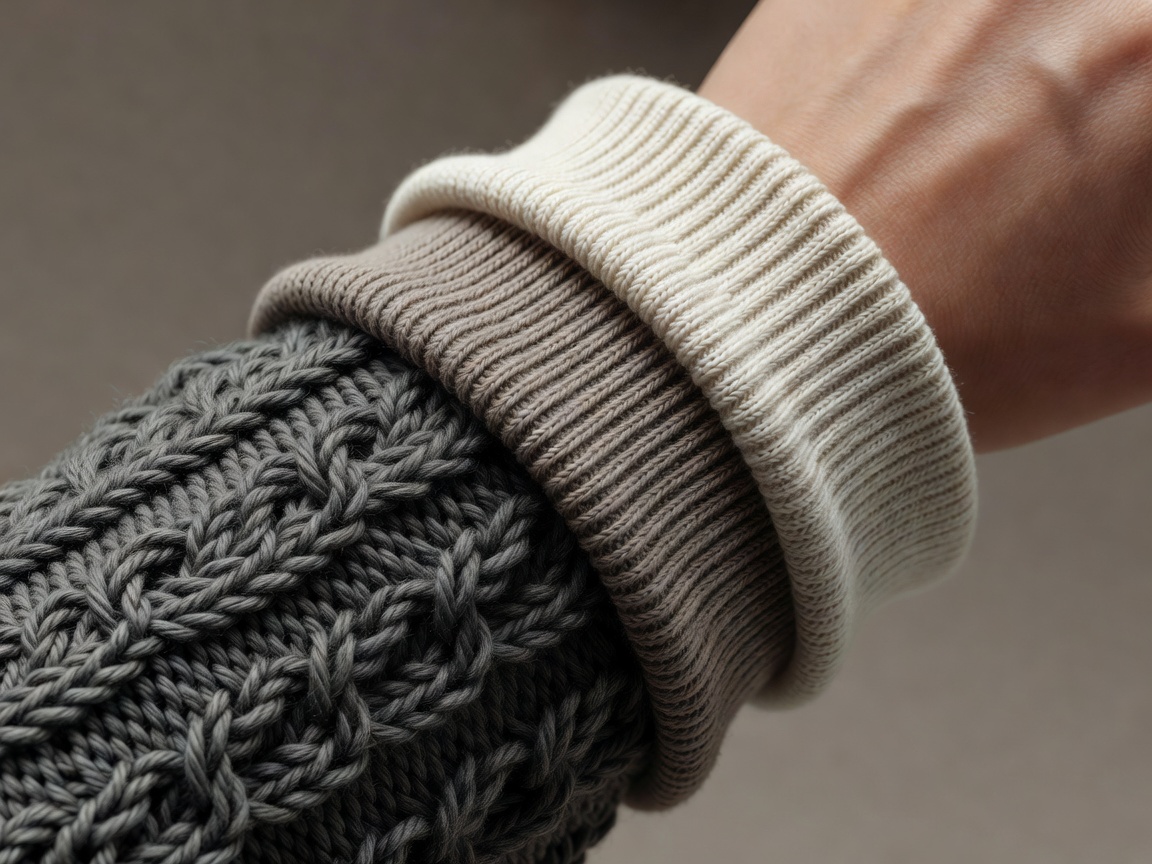
Layering fails most often through bulk. Each layer should be slightly roomier than the one beneath it, so the arms can move and air is not compressed. Sleeve length is the quiet test: inner cuffs should sit at or just inside outer cuffs, not bunch at the wrist.
Hem lengths can step down or up deliberately. A longer fine knit visible beneath a cropped chunky sweater is a classic look in Scandinavian street dress; the reverse, a long cardigan over a short knit, elongates the line. What matters is that the visible edge looks intentional.
Indoors, remove the shell first, then open the cardigan. Overheating in a warm room soaks the base layer and makes the walk home colder. A good layered outfit is one you adjust several times a day.
Layers last longer with good habits between wears: The Between-Wears Ritual.